Which is better in Boise, a water softener vs. a water filter?
Two problems, one sink. Your dishwasher leaves the glasses spotted, and the water smells faintly of a swimming pool. One company quotes a softener. Another quotes a filter. That makes the water softener vs water filter question feel like a coin flip, but it isn’t one. A softener and a filter fix completely different problems, and in a hard-water town like Eagle, most homes need both. The real job is figuring out which problem you actually have before you spend a dollar.
Water softener vs water filter: they don’t do the same job
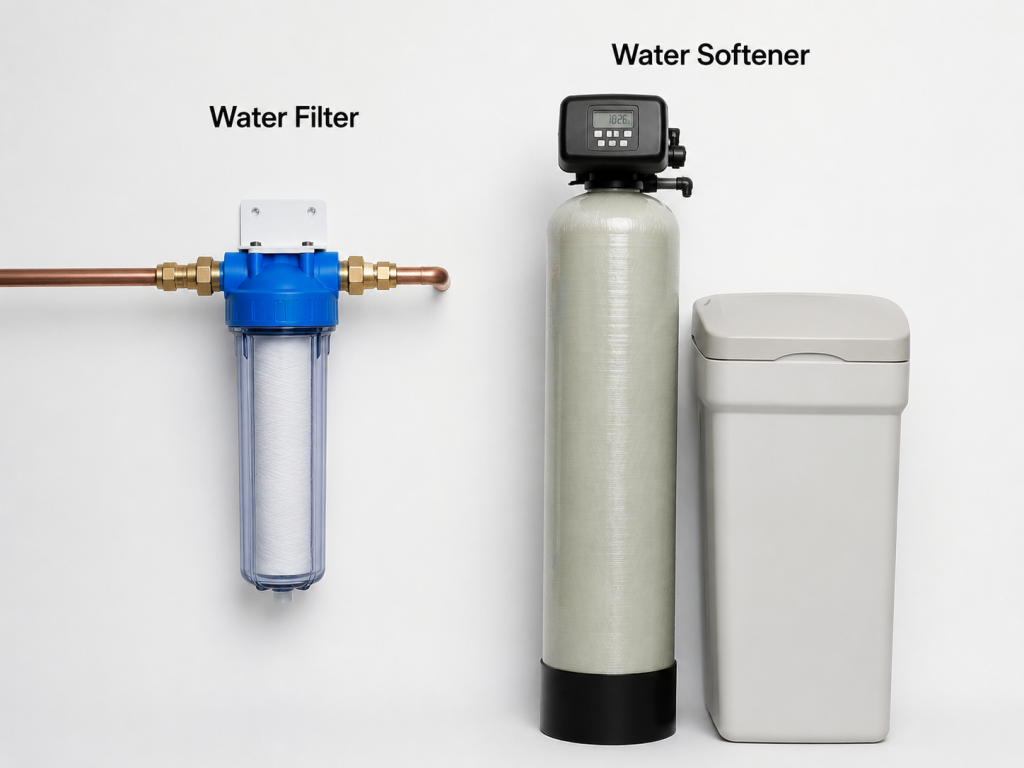
Start with how these systems get certified. It settles the debate fast.
| Standard | What it handles | System |
|---|---|---|
| NSF/ANSI 44 | Hardness (calcium and magnesium) | Water softener |
| NSF/ANSI 42 | Taste, odor, chlorine | Carbon filter |
| NSF/ANSI 53 | Health contaminants (lead, cysts) | Filter |
| NSF/ANSI 58 | Broad dissolved contaminants | Reverse osmosis |
A softener changes how your water behaves. A filter changes what is in it. Scale on your faucet is a behavior problem. A bad taste or a contaminant is a contents problem. Buy for the wrong one and you have spent real money solving nothing, which I have seen happen more than once. Don’t worry, when in doubt just call a plumber! Let us expand more below:
What a water softener does (and doesn’t)
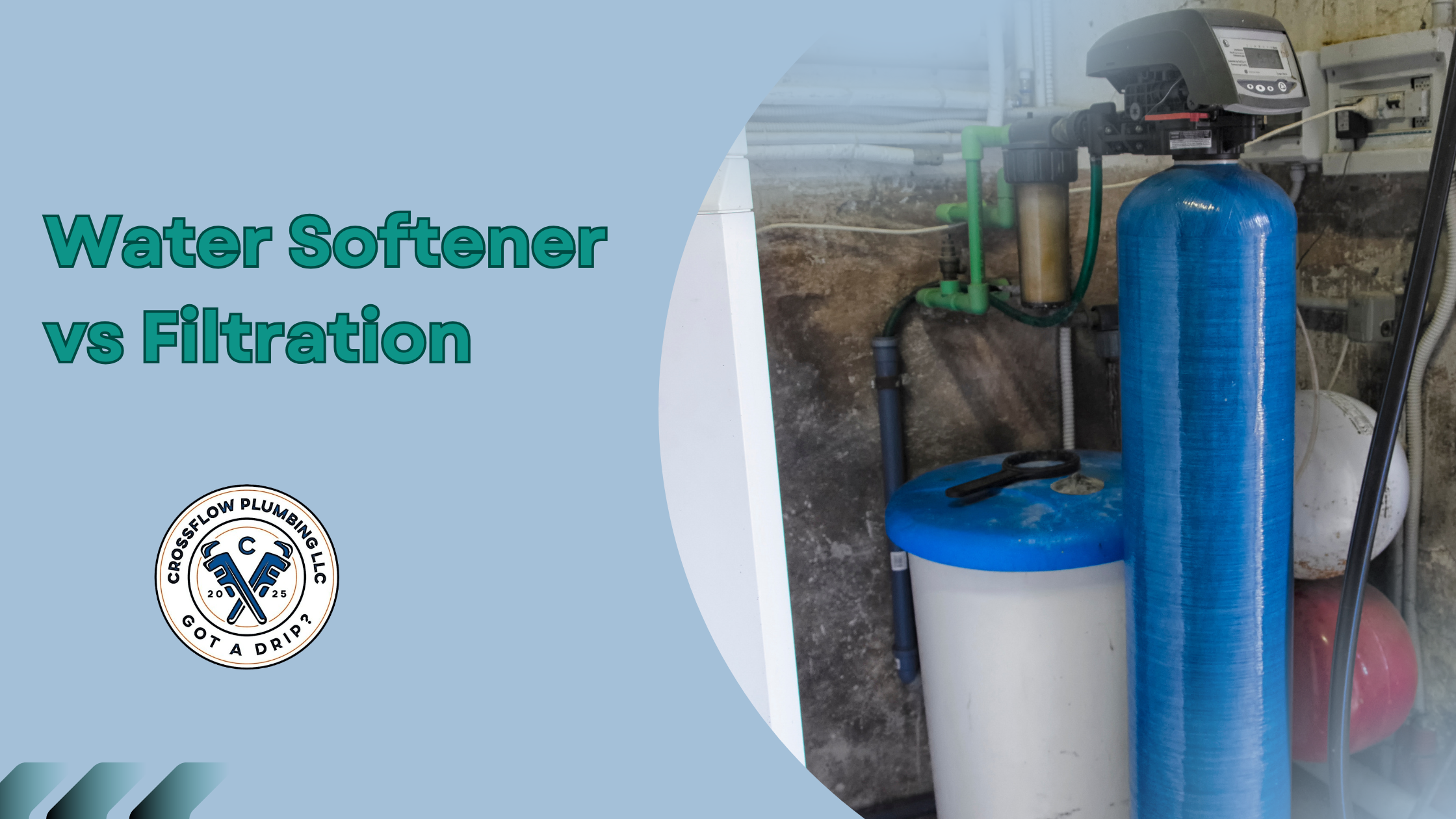
A softener has one job: strip out the calcium and magnesium that make water hard. Our valley has plenty to strip. Treasure Valley hardness runs 6 to 15 grains per gallon. Eagle gets cited around 6 to 9 (the city has reported figures as high as 14), and Boise sits at 10 to 13, which the USGS classifies as very hard.
A softener fixes:
- Scale inside pipes, faucet heads, and the kettle.
- A water heater that rumbles, runs up your energy bill, and dies early. The Water Quality Association notes hard water can cut water-bearing appliance life by up to 50% and push water-heating energy use up around 30%.
- Soap that won’t lather and skin that feels dry after a shower.
A softener can’t touch:
- Chlorine taste and smell.
- Lead.
- Arsenic.
That second list matters more than most people expect, which is where a filter comes in.
What a water filter does (and doesn’t)
A filter pulls things out of the water. Which filter you need depends entirely on what you are removing:
- Chlorine or chloramine taste and odor: a carbon filter (NSF 42).
- Health contaminants like lead: NSF 53.
- A broad range of dissolved contaminants at the drinking tap: reverse osmosis (NSF 58).
One warning every Treasure Valley homeowner should hear. Arsenic occurs naturally in our groundwater, leaching from the region’s volcanic geology, and it has no taste, smell, or color. A softener cannot remove it. Reverse osmosis at the kitchen tap can. On a private well, some Eagle homes also test positive for uranium and nitrate. If you are on a well, get a lab test, full stop.
The reverse of the softener’s limit also holds: a filter does nothing for hardness. The best carbon block on the market still leaves the calcium in, so your water heater still scales.
Which does your Eagle home need? Match the symptom
Match what you are seeing at the tap to the fix.
| What you notice | Likely culprit | What fixes it |
|---|---|---|
| Spotty glasses, crusty faucets, scale in the kettle | Hardness | Water softener (NSF 44) |
| Water heater rumbling, dying early, rising bills | Scale on the element and tank | Water softener |
| Chlorine or “swimming pool” smell and taste | Chlorine or chloramine | Carbon filter (NSF 42) |
| Orange or brown staining in sinks and tubs | Iron | Iron filter, usually before a softener |
| Worry about arsenic, lead, or nitrate you can’t taste | Dissolved contaminants | Reverse osmosis (NSF 58) |
| Dry skin, dull laundry, soap that won’t lather | Hardness | Water softener |
The pattern jumps out. Scale, skin, and soap point to a softener. Taste and health contaminants point to a filter. Plenty of homes check boxes in both columns, which is why the answer for a lot of Eagle houses is not one or the other.
Are salt-free “softeners” worth it here?
You will get pitched a salt-free “softener,” and the name oversells it. These use Template Assisted Crystallization (TAC). The honest version:
- It doesn’t soften. The calcium and magnesium stay in your water, so your hardness reading, your soap lather, and your dry skin don’t change. It only keeps minerals from sticking as scale.
- There’s no NSF standard for it. No performance certification exists for salt-free conditioners at all, unlike the NSF 44 that real softeners must meet, so nothing verifies the box claims.
- It fades in hard water. TAC works reliably only up to about 10 grains per gallon. Boise and much of the valley sit at or above that, so a salt-free unit here often runs at the edge of its range.
To be fair, it is not junk. An Arizona State University study found TAC reduced scale by more than 90%, far better than magnetic or electronic descalers at roughly 50%. If scale is your only concern, your hardness is moderate, and you want zero salt and low upkeep, it has a real case. Just don’t expect the slick, soft-water feel.
Do you need both a water filter and water softener?
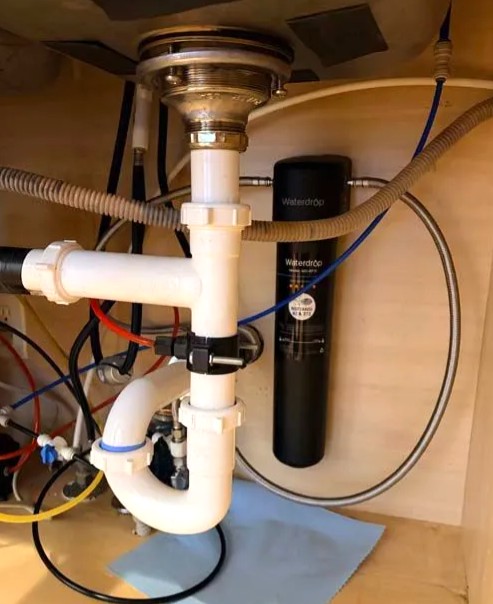
Whether you live in Kuna, Nampa, Eagle, or Meridian, the answer is almost always yes! Once you see they play different positions, “both” stops sounding like an upsell. The setup I recommend most for a Treasure Valley home:
- A whole-home softener to protect every pipe, fixture, and appliance from scale.
- A reverse osmosis unit under the kitchen sink for the water you drink and cook with.
The softener guards the house. The RO guards your glass. It also answers the sodium question people raise: softening adds a little sodium to your water, and running the drinking water through RO strips it back out at the tap, along with the arsenic and anything else dissolved.
As Christopher Ponce, who runs Crossflow, tells folks: “A softener protects your house. A filter protects your body. They’re teammates, not rivals, and most homes here are better off with both.”
Rough budgeting, because cost drives the call:
- Softener: equipment and install, plus salt, commonly a few hundred dollars a year at our hardness.
- Under-sink RO: a smaller, separate cost.
- Sizing: our hard water makes a softener regenerate more often, so an undersized unit gets swamped. Worth getting right rather than guessing.
Start with a water test in Boise:
The smartest first move costs almost nothing: test your water before you buy anything. A test gives you your exact hardness and flags iron, arsenic, or nitrate, which is what decides whether you need a softener, a filter, or both. The whole water softener vs water filter choice comes down to what is in your water and how it behaves, and you can’t get that from a brochure. Or a blog. Not even this one.
Free basic tests are easy to find around the valley, and a full lab panel is worth it on a well. Once you know your numbers, the right system is usually obvious. If you want a straight read on your water and an honest recommendation with no pressure to buy the biggest system on the truck, Crossflow Plumbing serves Eagle and the whole Treasure Valley.
Call us at 208-559-3321.
Frequently Asked Water Filter & Softener Questions
1. Is a water softener or water filter better for Boise-area homes?
Neither system is automatically better because they solve different problems. A water softener removes hardness minerals that cause scale, while a water filter reduces chlorine, odors, and specific contaminants. Many Boise and Eagle homeowners benefit from having both systems.
2. Will a water filter remove hard water?
No. Standard carbon filters and reverse osmosis systems do not soften water throughout your home. If you notice spotty dishes, crusty faucets, dry skin, or scale inside your water heater, you likely need a properly sized water softener.
3. Does a water softener remove chlorine, arsenic, or lead?
A water softener is not designed to remove chlorine, arsenic, lead, or most other contaminants. Chlorine taste and odor usually require a carbon filter, while concerns such as arsenic, lead, or nitrate may require a certified reverse osmosis system.
4. Are salt-free water softeners effective in Boise?
Salt-free conditioners can help reduce scale buildup, but they do not actually remove calcium and magnesium from the water. Because Boise and the Treasure Valley can have relatively hard water, a traditional water softener is often the more effective option for improving soap performance, reducing spotting, and protecting appliances.
5. Should I test my water before installing a softener or filter?
Yes. A water test can identify your exact hardness level and reveal issues such as iron, nitrate, or arsenic that cannot be diagnosed by taste or appearance alone. Crossflow Plumbing can help you review your water concerns and choose the right water treatment system for your Boise, Eagle, Meridian, Nampa, Kuna, or Star home. Call 208-559-3321 to get started.