Are you looking for some emergency drain cleaning help or tips? Whether you live in Eagle, Meridian, or Boise, we can help you out with our list below!
If you have water rising in the shower while the washing machine runs. Somewhere behind that is a question worth answering before you call anyone: is one drain backing up, or all of them?
Emergency drain cleaning in Boise splits along that single line. One slow drain is usually a routine clog and a modest bill. Multiple drains failing together points to your main sewer line, and that changes everything about what happens next.
4 Emergency Drain Cleaning and Blockage Tips
Before You Call an Emergency Plumber, Check These 5 Things
Not sure how serious the backup is? Take a quick look around the house before doing anything else:
- Check more than one drain. If several drains are backing up, you may have a main sewer line problem.
- Flush one toilet and listen. Gurgling from a tub, shower, or nearby sink can point to a blockage farther down the line.
- Look at your lowest drains first. Showers, tubs, and floor drains often show a sewer backup before other fixtures.
- Stop using water if multiple fixtures are affected. Avoid running the dishwasher, washing machine, showers, or additional sinks.
- Skip the chemical drain cleaner. It may not solve a serious blockage and can make the situation more difficult to work on.
If sewage is coming into your home or multiple drains are backing up at once, call Crossflow Plumbing at 208-559-3321 for emergency drain cleaning in Eagle, Boise, Meridian, Nampa, Star, and surrounding Treasure Valley communities.
1. Run the ninety-second test
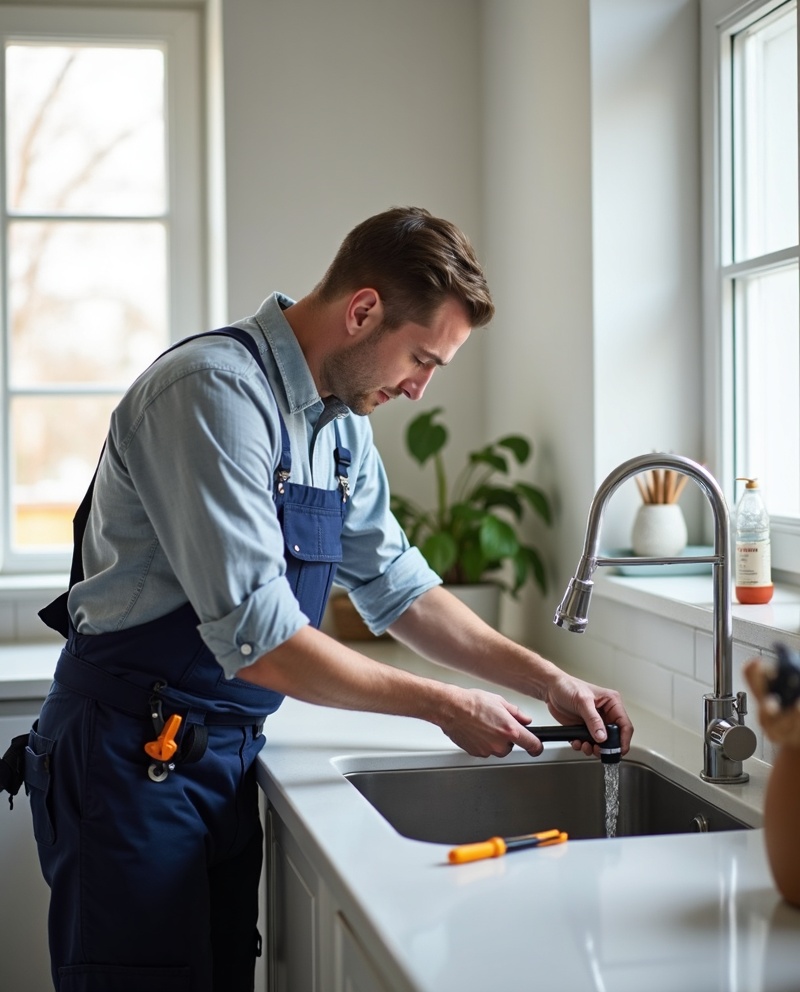
Walk the house and run water at each fixture. Flush a toilet. Start the tub. Pay attention to whether the trouble stays in one spot or travels.
Watch especially for connected symptoms, which are the tell that something bigger is wrong. Flushing a toilet and hearing the tub gurgle means those fixtures share a blocked line downstream. Running the washing machine and finding water in a basement floor drain means the same thing. Water follows the path of least resistance and exits at the lowest available opening, which is why basement floor drains and ground-floor showers usually break the news first.
One fixture misbehaving on its own is a localized clog. Two or more talking to each other is a main line problem, and the response is different.
2. Check if it is one drain or many
Localized clogs are the good news scenario, relatively speaking.
Kitchen sinks fail from grease and food solids that congeal on the pipe wall and narrow it over months. Bathroom sinks and tubs collect hair bound up with soap scum, which forms a surprisingly durable mat. Toilets block from a foreign object more often than homeowners like to admit, and if you have young children, check there first before assuming anything about the sewer.
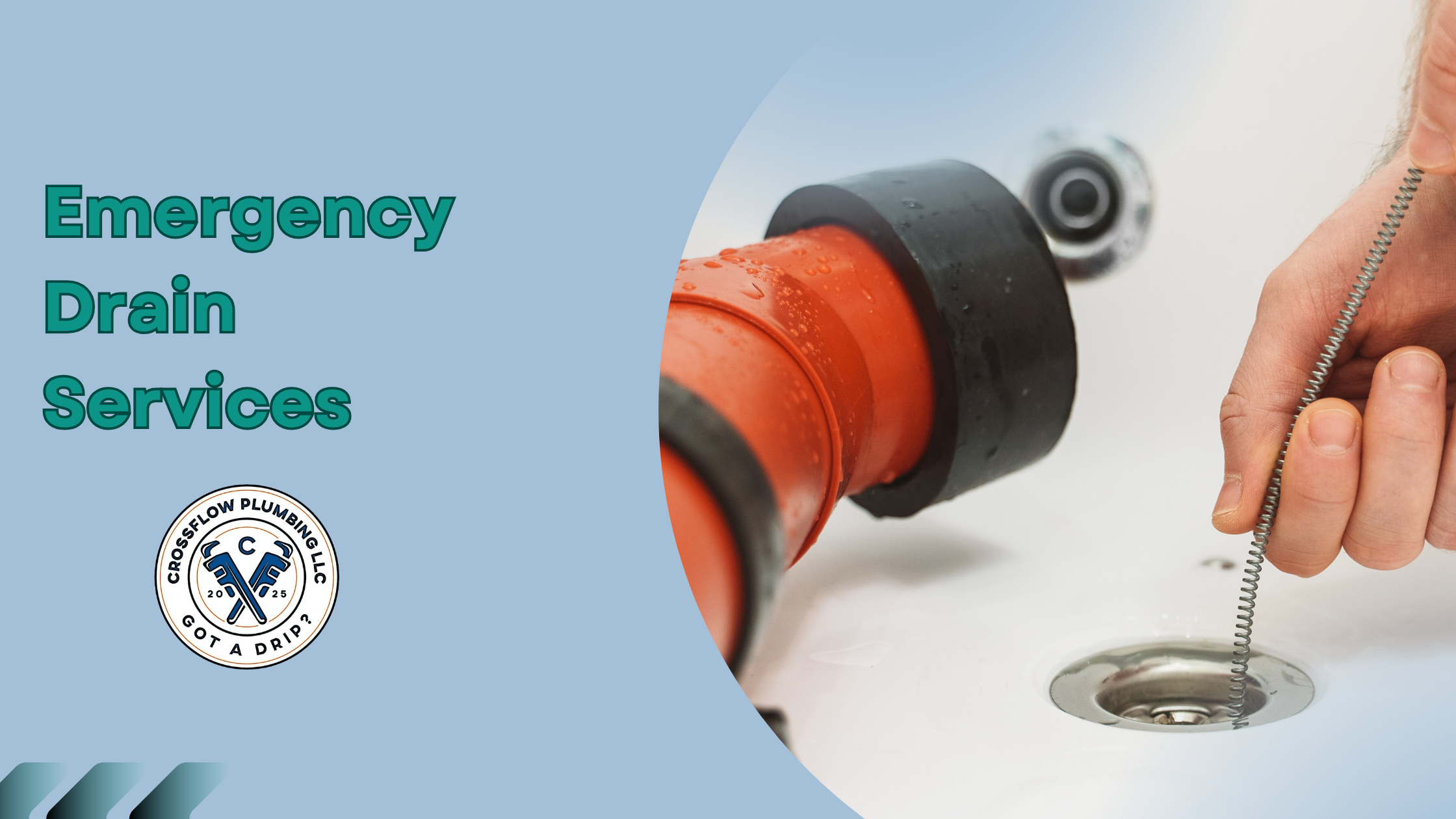
A plunger handles a fair number of these, provided you use it correctly by sealing the drain and working it with steady strokes rather than heroic ones. Should the clog resist a few honest attempts, stop. Repeated aggressive plunging on a fully blocked line can push water into places you do not want it.
“One slow drain usually gives you some time. When several drains start backing up or talking to each other, that’s when we want homeowners to stop using water and give us a call. The sooner we can identify what’s happening in the line, the better chance we have of preventing a much bigger mess.”
— Crossflow Plumbing LLC
3. If it is every drain, stop using water
Multiple fixtures backing up simultaneously means the blockage sits in the main line that carries everything out of your house. Anything you send down a drain from that point forward has nowhere to go except back up through the lowest fixture.
Stop running water entirely. No dishwasher, no laundry, no showers, and go easy on the toilets. Sewage backing up into a home carries genuine health hazards along with the mess, and every gallon you add makes the cleanup worse.
Signs pointing squarely at the main line:
- Several drains slow or backing up at the same time, particularly the lowest ones in the house.
- Toilets bubbling or gurgling when you run the washing machine or a sink.
- Sewage odor indoors, or worse, water appearing in a tub or shower when you flush.
- A patch of lawn above the sewer line that stays soggy or unusually green during dry weather.
4. Don’t use drain cleaners if you have an issue
Somewhere under your sink sits a jug promising to dissolve anything in its path, a magical drain cleaner. That claim is accurate. It simply neglects to mention that your pipe is also in its path.
Chemical drain cleaners work through caustic or acidic reactions that generate real heat, and that heat does not politely stop once the clog opens. Sodium hydroxide products soften and warp PVC, especially at joints and bends where the chemical pools. A warped section develops a low spot, that low spot collects standing water and debris, and you have converted a one-time clog into a recurring one. Older metal lines fare worse, since acids accelerate pitting in cast iron and galvanized steel that has already been corroding quietly for fifty years.
Rubber gaskets and seals degrade too. Septic systems lose the bacteria they depend on. Angie Hicks of Angi named chemical drain cleaners the product plumbers most wish homeowners would stop buying, and the trade agrees with unusual consistency.
Two safety points that matter more than the pipe damage. Never plunge a drain holding chemical cleaner, because splashback of caustic liquid into your eyes is exactly as bad as it sounds. And if you already poured something down there, tell your plumber before work starts. Opening a P-trap full of concentrated drain cleaner is a genuine hazard, and we would rather know in advance.
Drain Clogs in Older Boise neighborhoods back up more
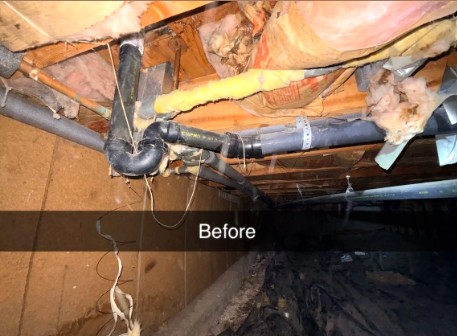
Sewer trouble in this valley correlates strongly with the year your house went up, and the reason is buried in the yard.
Homes built before roughly 1945, which describes much of the North End and Boise’s older core, typically sit on clay tile laterals. Clay does not usually collapse dramatically. It fails progressively at the joints, and each compromised joint becomes a doorway for tree roots hunting moisture. Mature neighborhoods with fifty-year-old trees have been running that experiment for decades.
Houses from roughly 1945 to 1972, the postwar era that built out big sections of the Bench and similar neighborhoods, may have something worse. Orangeburg pipe, made from wood pulp bound with coal tar, went into laterals across the country during the postwar material shortages. It was engineered for about fifty years of service. Those pipes are now somewhere between fifty and eighty years old. The American Society of Civil Engineers puts typical wastewater pipe lifespan at fifty to one hundred years, and Orangeburg sits at the absolute floor of that range.
| Home built | Likely lateral material | Typical failure mode |
|---|---|---|
| Before 1945 | Clay tile | Joint separation, root intrusion |
| 1945 to 1972 | Orangeburg or clay | Deformation, collapse, root intrusion |
| After 1975 | PVC | Generally sound; bellies from settling |
Understanding this explains something that frustrates homeowners endlessly. Root intrusion in an old clay lateral does not happen at one convenient spot. Roots enter at every deteriorated joint along the run, creating a series of partial blockages. Snake it, and you punch a hole through the roots; water flows; everyone feels good for eight months. Then it backs up again, because the underlying condition never changed. Repeated backups in an older Boise home are rarely a clog problem. They are a pipe condition problem wearing a clog costume.
Snake, jet, or camera?
Three tools, three different jobs, and knowing which you need keeps you from paying for the wrong one.
Cable machines, the classic drain snake, punch through a blockage and restore flow fast. Good for hair, a localized obstruction, or getting an emergency under control tonight. The limitation is that a cable bores a channel rather than cleaning the pipe wall, so grease and scale stay behind.
Hydro jetting uses high-pressure water to scour the interior surface back toward bare pipe. It genuinely cleans rather than perforating, which makes it the better answer for grease-loaded kitchen lines and recurring buildup. Older, fragile pipe deserves caution here, and any competent plumber will want to know what they are jetting before turning the pressure up.
Camera inspection answers the question the other two cannot: what is actually going on down there. On any home with recurring backups, especially one built before 1975, scoping the line first saves money. A camera distinguishes root intrusion from a bellied section from a collapsed pipe, and those three problems have three different solutions with wildly different price tags.
Should your line turn out to be Orangeburg, worth knowing in advance: trenchless lining is not always viable, because the pipe must be structurally sound enough to act as a mold for the liner, and badly deteriorated Orangeburg can collapse during the cleaning that lining requires.
Winter makes kitchen lines worse
Cold weather changes the math on grease, and Boise winters are cold enough to matter.
Fats poured down a drain in July travel a fair distance before cooling. The same fats hitting a line that runs through an unheated crawl space in January solidify almost immediately, coating the pipe wall a few feet from where they entered. Kitchen backups cluster in the weeks after Thanksgiving and Christmas for exactly this reason, since holiday cooking produces more grease in a week than most kitchens generate in two months.
Prevention here is genuinely simple and works better than anything sold in a bottle:
- Pour cooking fat into a can, let it harden, and put it in the trash rather than down the disposal.
- Run cold water while the garbage disposal works, since cold keeps fats solid enough to grind and carry through instead of coating the pipe.
- Put mesh strainers in every tub and shower, because hair caught in a strainer costs nothing and hair caught in a P-trap costs a service call.
- Flush kitchen lines periodically with very hot water to soften soap and grease film before it hardens into something structural.
Enzyme-based products are the one category worth keeping around. They use bacteria to digest organic buildup slowly rather than burning through it, so they will not damage pipe, though they work on maintenance timelines rather than emergencies.
Emergency Plumber Now vs Waiting to Call:
| Call now | Fine until morning |
|---|---|
| Sewage backing up into tubs, showers, or floor drains | One slow sink or tub |
| Multiple drains backing up together | A single toilet clog with other bathrooms working |
| Water rising and no drain accepting it | Gurgling with no backup yet |
| Sewage odor with visible water indoors | Slow drainage that has been slow for weeks |
Middle ground exists. Gurgling and slow drainage across several fixtures, with nothing overflowing yet, is a system telling you it is about to fail. That earns a next-day call rather than a midnight one, and getting ahead of it beats waiting for the version that involves a shop vac.
What to do before a plumber arrives:
Emergency drain cleaning in Boise goes faster when a few things are handled before the truck shows up. Clear the area around the affected fixture and move anything absorbent off the floor. Skip the chemicals, and tell us if any went down earlier. Note the exact sequence of what happened, since which fixture failed first genuinely narrows the diagnosis. If your home predates 1975 and you know the sewer line has never been scoped, mention that too.
One question is worth settling tonight while the trouble is fresh: does your house have a sewer cleanout, and where is it? That capped fitting, usually outside near the foundation, is the access point for clearing a main line, and finding it in the dark under a shrub costs time you are paying for. Crossflow Plumbing runs emergency drain and sewer calls across Boise, Eagle, Meridian, Nampa, Star, Kuna, Melba, and Middleton. Call 208-559-3321, and we will tell you what to stop using while we are on the way.
Frequently Asked Drain Clog & Cleaning Questions
1. When should I call an emergency drain cleaning plumber in Eagle, Idaho?
Call an emergency drain cleaning plumber in Eagle, Idaho when multiple drains are backing up, sewage is entering a tub or shower, toilets are overflowing, or water will no longer drain from the home.
A single slow sink may be able to wait until normal business hours. Multiple fixtures backing up at the same time can indicate a blockage in the main sewer line and should be addressed quickly.
2. Why are my toilet and shower backing up at the same time in Boise?
If flushing your toilet causes water to rise in the shower or makes another drain gurgle, there may be a blockage farther down the shared drain or sewer line.
This is different from a simple toilet clog. Homeowners in Boise and Eagle experiencing problems with several fixtures should stop using unnecessary water and have the drain or sewer line inspected.
3. Do you provide emergency drain cleaning in Eagle, Boise, Meridian, Nampa, and Star?
Yes. Crossflow Plumbing provides drain and plumbing services throughout Eagle, Boise, Meridian, Nampa, and Star, Idaho, as well as surrounding Treasure Valley communities.
If you have a backed-up kitchen sink, clogged shower, overflowing toilet, or suspected sewer line blockage, call 208-559-3321 to discuss what is happening and determine the next step.
4. Do I need drain snaking, hydro jetting, or a sewer camera inspection?
It depends on what is causing the blockage in your pipes or drains. Drain snaking can quickly open many common clogs, while hydro jetting can remove heavier grease and buildup from the inside of a drain line.
For recurring sewer backups, root intrusion, or suspected damaged pipes, a sewer camera inspection can help identify what is actually happening inside the line before deciding on a repair.
5. What should I do while waiting for an emergency plumber in Eagle or Boise?
If you live in Boise, Meridian, or Eagle and several drains are backing up, stop using water throughout the house. Avoid showers, laundry, dishwashers, faucets, and unnecessary toilet flushing because additional water can make a sewer backup worse.
Move belongings away from affected drains, avoid chemical drain cleaners, and locate your sewer cleanout if you know where it is. Then call Crossflow Plumbing at 208-559-3321 for emergency drain cleaning help in Eagle, Boise, Meridian, Nampa, or Star.