Why is my sink clogging? What should I do when my shower doesn’t drain, or the kitchen sink isn’t draining properly? These are all very valid questions we get all the time in Boise and Eagle, and today, we are going to answer them for you!
Slow bathroom or kitchen sinks usually stem from soap scum, hair, and debris trapped around the pop-up or drain catch, a buildup that worsens over time. Inadequate venting or loose trap connections can also block flow entirely. Crossflow Plumbing, serving Eagle, Boise, Meridian, Nampa, and Star, diagnoses the exact cause and clears it fast.
Why is my sink draining so slowly?
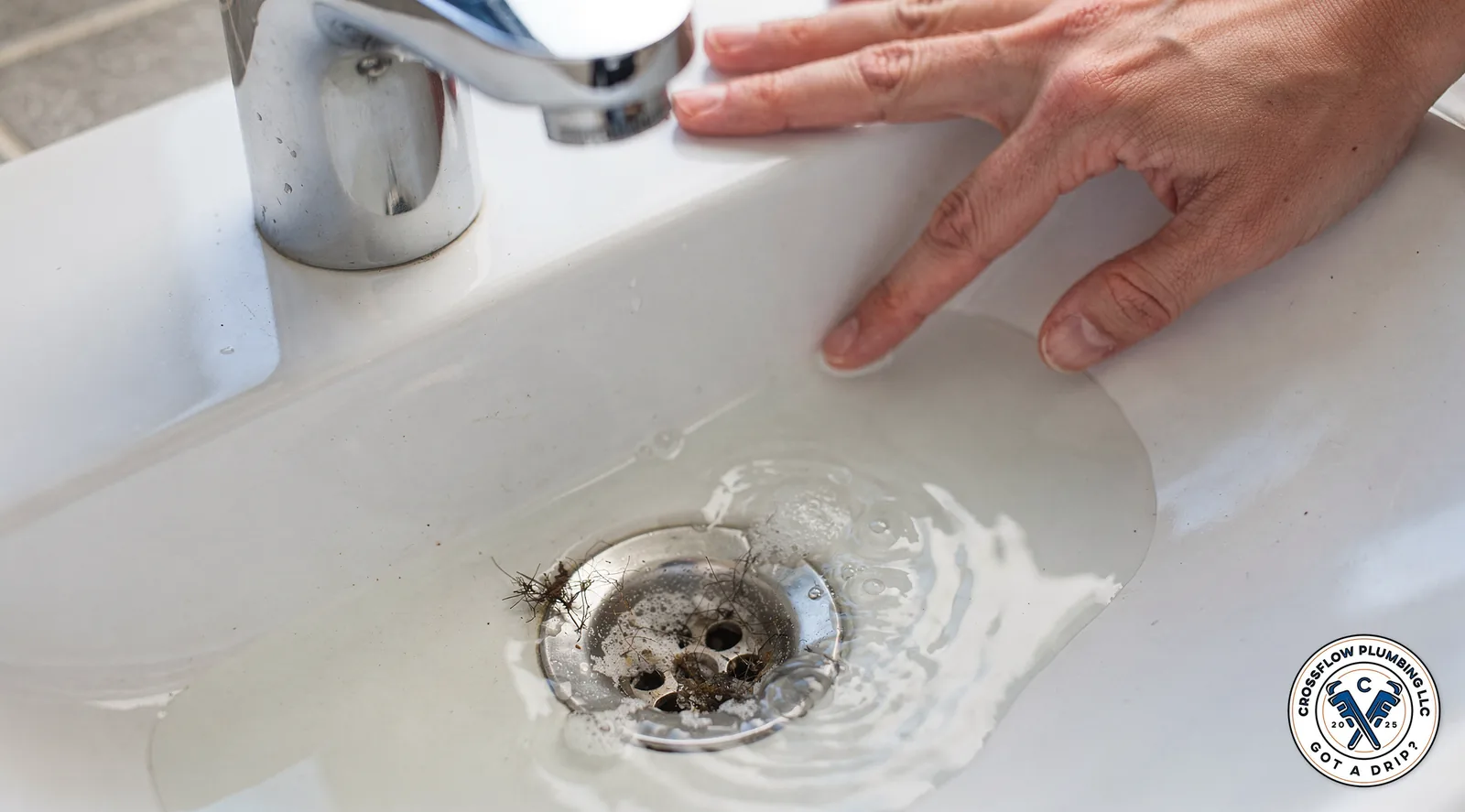
A slow-draining sink almost always points to debris trapped inside the pipes. In the kitchen, grease, food scraps, and soap buildup stick to pipe walls and gradually restrict water flow. Bathroom sinks face a different culprit: hair, soap scum, toothpaste, and skin cells combine to form stubborn clogs that choke drainage over time.
What role does the P-trap play in slow drainage?
The curved pipe under the sink—called the P-trap—is designed to hold water and block sewer gases from entering the home. When this trap fills with debris, water cannot pass through freely. A blocked or dirty P-trap ranks among the most common causes of sluggish drainage. Cleaning it often restores normal flow immediately.
Can inadequate venting cause a sink to drain slowly?
Yes. Plumbing vents supply the air pressure needed for water to flow down the drain freely. When venting is inadequate or blocked, air cannot enter the system, creating a vacuum that slows or stops drainage entirely. Homeowners who have cleaned the P-trap and still see slow draining should consider a vent issue as the hidden cause.
Common slow-drain causes at a glance:
| Cause | Where it occurs | Typical debris |
|---|---|---|
| Pipe buildup | Kitchen or bathroom | Grease, soap scum, hair |
| Blocked P-trap | Under the sink | Toothpaste, skin cells, small objects |
| Inadequate venting | Behind walls or roof | Blocked vent pipe, improper installation |
Addressing sink clogging early prevents the problem from escalating into a complete blockage. Regular cleaning of the P-trap and using drain catchers in bathroom sinks reduce buildup significantly.
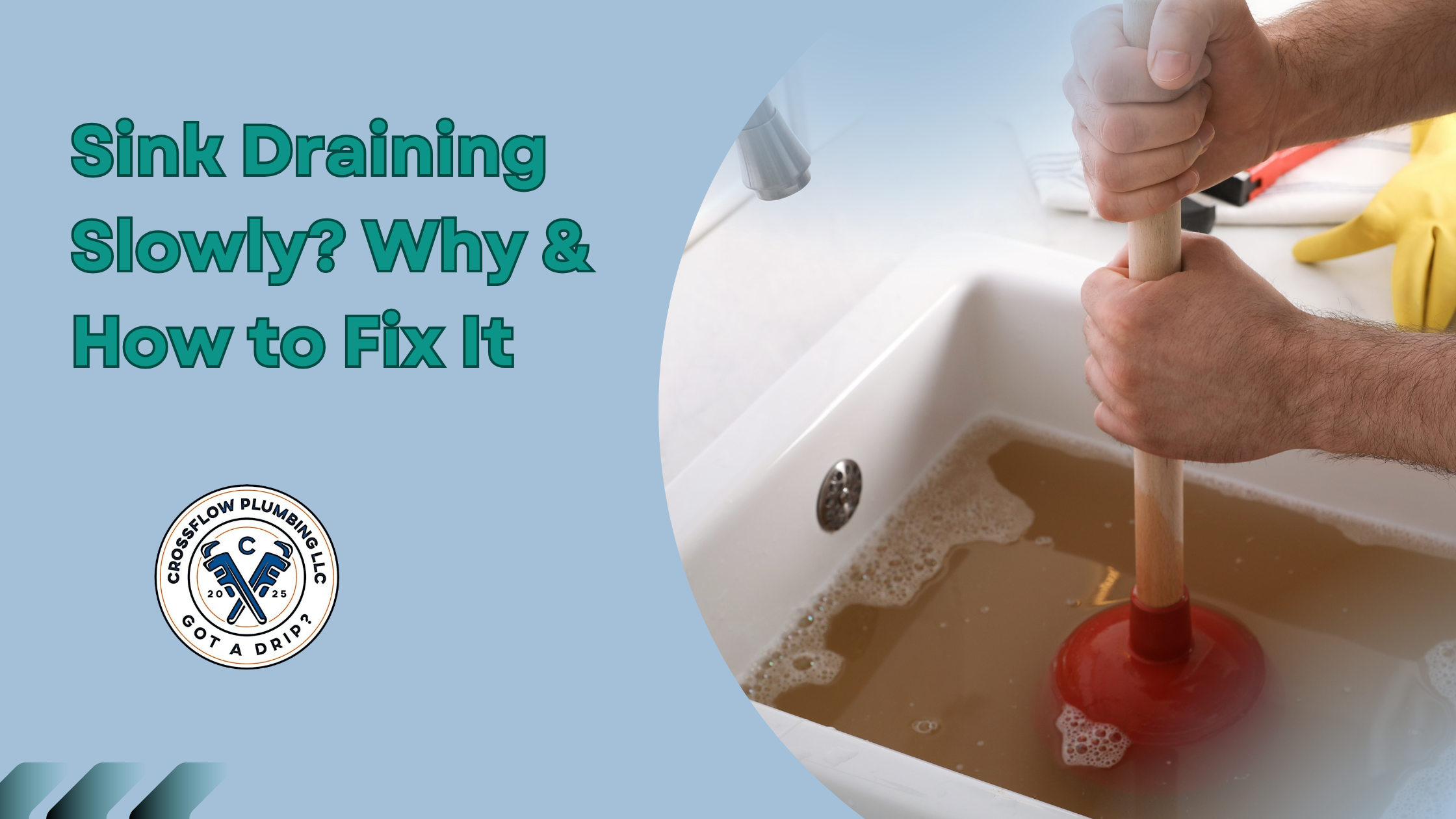
How can I fix a slow sink drain myself?

Homeowners in Eagle, Meridian, and Boise can resolve many slow-draining sinks without calling a plumber. A sink clogging issue often responds to simple manual tools and household ingredients before professional help becomes necessary.
Sink clogs in Boise, what to know:
Boise’s hard water leaves mineral deposits inside pipes which means overtime you can see issues with your older pipes and homes that are 15 years older. On top of the hard water, while a water softener certainly helps, what you should certainly avoid is pouring grease and fats down your drains. While your home might be newer in Boise, Meridian, or Eagle, there is also older sections of the area where the infrastructure is aging in Boise.
What tools work best for removing drain clogs?
A drain zip tool provides the most direct solution for hair and debris blockages. This inexpensive, flexible 2-foot plastic strip features small barbs that catch and pull out clogs without chemicals. Homeowners simply insert the tool into the drain, twist, and withdraw the trapped material. The process takes under five minutes and avoids harsh chemical drain cleaners that damage pipes over time.
Can household ingredients clear slow drains?
A tablespoon of table salt combined with a big splash of white vinegar creates an effective cleaning solution. Pour this mixture down the drain. Flushing it with hot water helps loosen pipe buildup from soap scum and grease. Repeating this treatment once every few weeks helps prevent future blockages.
How do drain catchers prevent future clogs?
Plastic or wire mesh catchers installed in bathroom sink drains stop hair and debris before they enter the pipes. These simple devices cost a few dollars and catch the primary causes of bathroom sink clogs. Emptying the catcher after each use keeps drains flowing freely for months between deeper cleanings.
Crossflow Plumbing provides professional drain cleaning services when DIY methods fail to restore proper drainage. Treasure Valley homeowners with persistent slow drains benefit from expert diagnosis. Equipment that reaches deeper blockages beyond household tools.
When should I call a plumber for a slow drain?
A slow drain that resists all DIY methods signals a deeper problem requiring professional intervention. Homeowners in Eagle, Boise, Meridian, Nampa, and Star should call a plumber when sink clogging persists after snaking, plunging, or cleaning the trap. A slow-draining sink can quickly turn into a bigger problem if left unchecked, according to plumbing professionals. The issue may indicate a clog deep within the main line or an inadequate venting system that prevents proper drainage.
What signs indicate a professional is needed?
Several warning signs demand expert attention rather than continued DIY attempts. Water backing up into other fixtures when the sink runs suggests a main-line blockage. Gurgling sounds from the drain point to venting problems that require specialized tools to diagnose. Multiple slow drains throughout the house indicate a systemic issue beyond a single fixture.
How does Crossflow Plumbing handle persistent slow drains?
Crossflow Plumbing brings local expertise to Treasure Valley homes, addressing region-specific challenges like hard water and mineral buildup in pipes. The team provides upfront pricing and clear communication without any hidden fees. Homeowners know the cost before work begins. For urgent situations, Crossflow Plumbing offers 24/7 emergency services for backed-up drains that cannot wait until morning.
Can My Garbage Disposal Cause the Sink to Back Up?
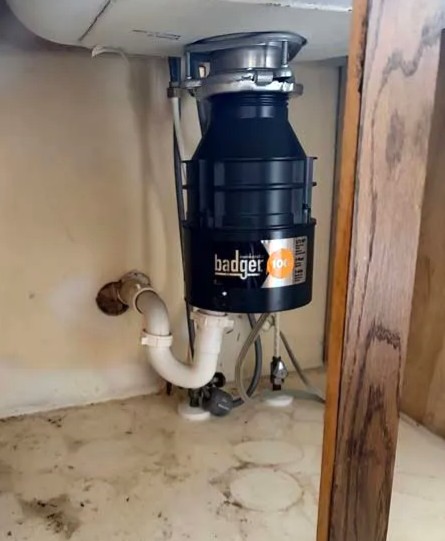
Yes. A garbage disposal can cause a kitchen sink to back up when food waste, grease, or other debris collects inside the disposal chamber or in the drain line connected to it. In a double-basin sink, this can also cause water to move from one side of the sink into the other.
The disposal itself may still turn on, which can make the problem confusing. A working motor does not always mean the drain line is clear.
Why Does My Garbage Disposal Hum but Not Drain?
A garbage disposal that hums but does not drain may be jammed or blocked. The motor is receiving power, but the grinding components may not be able to turn properly because something is lodged inside.
Food debris can also build up below the disposal and restrict the drain even if the motor is working. If the disposal hums but does not spin, avoid repeatedly turning it on because this can overheat the motor.
Homeowners should also avoid putting their hands inside the disposal. If the unit is jammed or the drain remains blocked after the power is turned off and basic troubleshooting is completed, a plumber can inspect both the disposal and the connected drain line.
Why Does Water Back Up Into the Other Side of My Sink?
In a double kitchen sink, both basins usually connect to the same drain system. When that shared pipe becomes clogged, water from one side can push into the other instead of flowing down the drain.
This often happens when food waste or grease collects in the horizontal drain piping beneath the sink. Running the garbage disposal may temporarily move the water around without actually clearing the restriction.
If water regularly backs up into the opposite basin, the clog is likely farther down than the sink opening itself.
Can a Garbage Disposal Be Running but Still Clogged?
Yes. A garbage disposal can spin normally while the drain line beneath it remains partially or completely clogged.
The disposal breaks food into smaller pieces, but those particles still have to travel through the plumbing. Grease, starches, coffee grounds, and other debris can stick to the inside of the pipe and gradually restrict water flow.
If the disposal sounds normal but water drains slowly or backs up, the problem may be inside the drain line rather than the disposal motor.
Why Does My Kitchen Sink Clog Again After I Clear It?
A kitchen sink that clogs again shortly after being cleared usually means the original blockage was not completely removed. A plunger or small drain snake may open enough space for water to move temporarily while leaving buildup behind.
Grease is one of the biggest reasons kitchen clogs return. It coats the inside of the pipe, allowing food particles and other debris to stick to the walls and rebuild the blockage.
A recurring kitchen sink clog can also be caused by:
- Only part of the original clog being removed
- Grease remaining along the inside of the pipe
- A blockage located farther down the branch drain
- Improper pipe slope that allows debris to collect
- A restriction in a larger drain or main sewer line
If a sink drains normally for a few days and then slows down again, repeated DIY clearing may only be treating the symptom. A plumber can determine how far the blockage extends and whether the drain needs a more complete cleaning.
Why Does My Kitchen Sink Back Up When I Run the Dishwasher?
Most dishwashers discharge wastewater into the kitchen sink drain system, often through the garbage disposal. If that drain is restricted, the large amount of water released during the dishwasher cycle may have nowhere to go.
The result can be water backing up into the kitchen sink.
A dishwasher backup can be caused by a clogged disposal connection, grease buildup in the kitchen drain, or a deeper restriction in the branch line. If the sink drains slowly even when the dishwasher is not running, that is another sign the kitchen drain may already be partially clogged.
Cleaning the drain connection and removing the underlying blockage usually restores proper drainage for both the sink and dishwasher.
Why Does My Kitchen Sink Smell Like Sewer?
A foul smell coming from the kitchen sink does not always mean there is a sewer problem. Food, grease, and organic material trapped inside the drain or garbage disposal can create strong odors as the material breaks down.
The garbage disposal is a common source. Small pieces of food can remain underneath the grinding components and produce an unpleasant smell even when the disposal appears clean from above.
Other possible causes include:
- Food buildup inside the drain
- Debris trapped inside the garbage disposal
- A dry or improperly functioning P-trap
- A plumbing vent problem
- A deeper sewer or drain issue
The P-trap beneath the sink holds water that helps prevent sewer gases from entering the home. If the trap is dry, leaking, or improperly installed, odors may travel through the drain opening.
Persistent sewer smells combined with gurgling, slow drains, or backups should be inspected. Those symptoms may indicate a larger drainage or venting problem.
Should I Use Drano or Chemical Drain Cleaner?
Chemical drain cleaners may open a small passage through some clogs, but they do not always remove the material causing the blockage. This is especially true with kitchen drains where grease and food buildup can coat a large section of the pipe.
Repeatedly pouring chemical cleaner into the drain can also make later plumbing work more difficult. If chemicals remain trapped behind a clog, anyone opening or removing the drain piping can be exposed to the product.
A recurring clog is usually better handled by identifying what is inside the drain and where the restriction is located. Mechanical drain cleaning or other professional methods can physically remove the blockage instead of relying on chemicals to create a temporary opening.
If you have already used a chemical drain cleaner, let your plumber know before work begins.
How Does a Plumber Clear a Kitchen Sink Clog?
A plumber starts by determining whether the blockage is limited to the kitchen sink or involves a larger section of the home’s drainage system. The location and severity of the clog determine which cleaning method makes the most sense.
The process may include:
- Inspecting the sink, garbage disposal, P-trap, and visible drain connections
- Using a drain snake to break through or remove the clog
- Cleaning the kitchen branch drain to remove buildup farther inside the pipe
- Using hydro jetting when heavy grease or recurring buildup requires a more complete cleaning
- Performing a camera inspection when clogs continue returning or a deeper pipe problem is suspected
The goal is not simply to make the standing water disappear. A proper drain cleaning should address the material that caused the restriction so the sink continues draining normally after the plumber leaves.
For homeowners in Eagle, Boise, Meridian, Nampa, and Star, Crossflow Plumbing can inspect recurring kitchen clogs and determine whether the problem is in the sink, garbage disposal, branch line, or farther into the plumbing system.
Do I Need Hydro Jetting for a Kitchen Drain?
Not every kitchen sink clog requires hydro jetting. A simple blockage near the sink may be cleared effectively with a drain snake.
Snaking and hydro jetting solve the problem in different ways. A drain snake travels through the pipe and breaks apart or retrieves the blockage, creating a path for water to flow again.
Hydro jetting uses high-pressure water to clean material from the inside walls of the pipe. This can be useful when grease, sludge, and other buildup cover a longer section of the drain.
A kitchen drain that repeatedly clogs despite previous snaking may benefit from a more thorough cleaning. A plumber should first inspect the condition of the plumbing and determine whether hydro jetting is appropriate for the specific pipe system.
When Should I Call a Plumber for a Clogged Kitchen Sink?
A minor kitchen sink clog may be manageable at home, especially when the cause is visible near the drain opening. Problems that repeatedly return or affect other fixtures usually need a closer inspection.
Call a plumber when you notice:
- Kitchen sink clogs that keep returning
- Multiple sinks or drains backing up at the same time
- Standing water that will not drain
- Persistent bad odors from the sink
- Gurgling sounds when water drains
- A garbage disposal that will not drain properly
- Water backing up when the dishwasher runs
Multiple plumbing symptoms are especially important. If the kitchen sink, nearby drains, or toilets begin acting up together, the problem may be farther down the drainage system.
Crossflow Plumbing provides drain cleaning and kitchen plumbing repair throughout Eagle, Boise, Meridian, Nampa, and Star. Finding the actual cause of a recurring clog can prevent repeated backups and help keep the kitchen drain flowing properly.
Frequently Asked Questions About Kitchen Sink Clogs
1. Why does my kitchen sink keep clogging every few weeks?
A kitchen sink that clogs every few weeks usually has buildup remaining inside the drain. Grease, food particles, soap residue, and other debris can continue collecting even after a small opening has been made through the clog.
Recurring problems may require the drain line to be cleaned more thoroughly rather than simply opened again.
2. Can grease permanently clog a kitchen drain?
Grease can create severe and recurring kitchen drain blockages. Liquid grease may travel down the drain while warm, but it cools and sticks to the inside of the pipe.
Over time, additional food waste and debris attach to that grease and reduce the pipe’s diameter. Heavy buildup may require professional drain cleaning to remove it from the pipe walls.
3. Why does my kitchen sink back up when the dishwasher runs?
The dishwasher usually drains into the same plumbing system as the kitchen sink. When that drain is partially clogged, the dishwasher can release water faster than the restricted pipe can carry it away.
The excess water may then rise into the sink. A clogged disposal connection or kitchen branch drain is often responsible.
4. Why are both sides of my kitchen sink clogged?
Both sides of a double kitchen sink usually connect to the same drain line. If both basins are holding water, the blockage is often located after the two drains join together.
The clog may be inside the P-trap, garbage disposal connection, or farther down the kitchen branch line.
5. Is hydro jetting good for kitchen drain clogs?
Hydro jetting can be effective for kitchen drains with heavy grease, sludge, or recurring buildup. Unlike a drain snake that mainly creates a path through a clog, hydro jetting can clean buildup from a larger portion of the pipe wall.
It is not necessary for every clog. A plumber can inspect the drainage system and determine whether snaking, hydro jetting, or another method is the best solution.